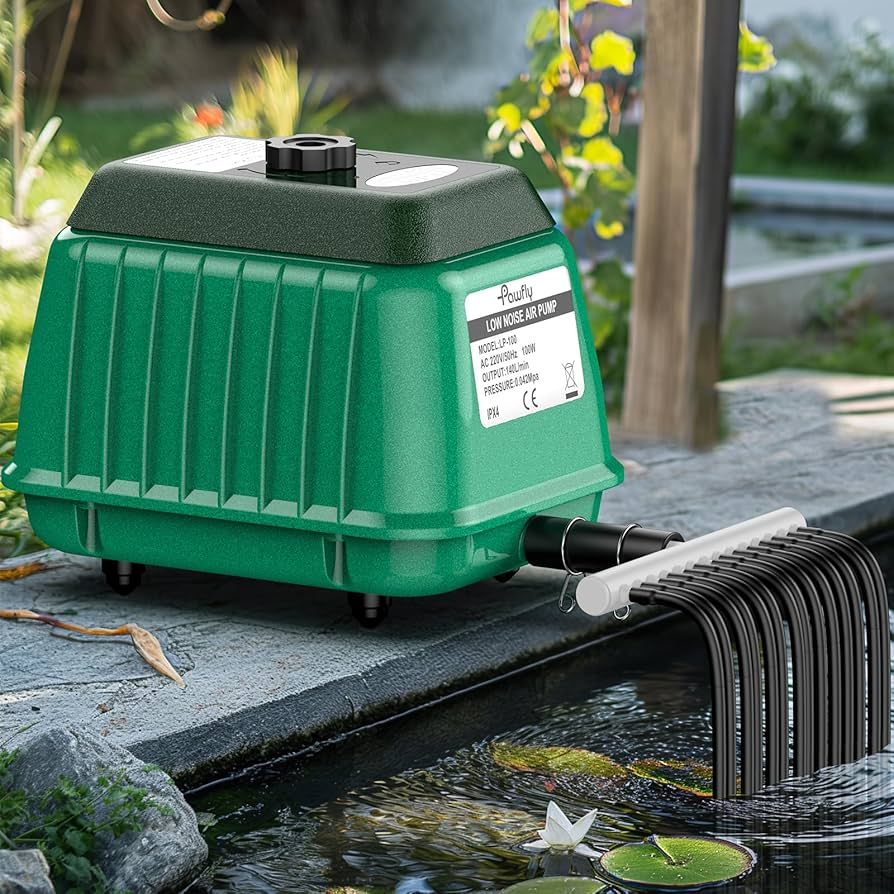
Oxygen is one of the most critical elements in any pond ecosystem, yet it is often overlooked. While pumps and filters focus on water movement and waste removal, a pond air pump plays a different but equally important role—supplying oxygen directly into the water. Without proper aeration, ponds can quickly become stagnant, leading to unhealthy water conditions and stressed fish.
A pond air pump works quietly in the background, creating streams of bubbles that improve oxygen levels and promote better water circulation. This is especially important in ponds with fish, deep areas, or limited surface movement. Even ponds that appear calm and clear can suffer from low oxygen levels below the surface.
From small garden ponds to large koi ponds, adding a pond air pump can dramatically improve water quality, fish health, and overall pond stability. It’s a simple piece of equipment with powerful benefits that extend throughout the entire pond ecosystem.
What Is a Pond Air Pump and How Does It Work?
Understanding Pond Aeration
Pond aeration is the process of increasing oxygen levels in the water. Oxygen enters a pond naturally through surface movement, plant activity, and wind action. However, these natural sources are often not enough, especially in warm weather or heavily stocked ponds.
Low oxygen levels can lead to:
- Fish gasping at the surface
- Buildup of harmful gases at the pond bottom
- Poor water quality and unpleasant odors
A pond air pump provides consistent aeration, ensuring oxygen reaches all areas of the pond.
How a Pond Air Pump Operates
A pond air pump works by drawing in air from the atmosphere and pushing it through airline tubing to air stones or diffusers placed in the pond. These diffusers release air as fine bubbles, increasing oxygen exchange.
The process:
- Air pump draws in fresh air
- Air travels through tubing
- Air stones release bubbles into the pond
As bubbles rise, they create gentle water movement, helping oxygen mix throughout the pond. This improves circulation and prevents stagnant areas from forming.
Why a Pond Air Pump Is Important for Your Pond
Maintaining Healthy Oxygen Levels
Fish, beneficial bacteria, and other aquatic life all rely on oxygen to survive. In ponds with high fish loads or warm temperatures, oxygen levels can drop dangerously low.
A pond air pump:
- Provides consistent oxygen supply
- Supports fish respiration
- Helps beneficial bacteria break down waste
This makes aeration especially important during summer, when warm water holds less oxygen.
Preventing Stagnation and Dead Zones
Without proper circulation, ponds can develop “dead zones” where water remains still and oxygen levels are low. These areas often collect waste and harmful gases.
Aeration helps:
- Move water from bottom to surface
- Release trapped gases
- Reduce sludge buildup
By breaking up stagnant layers, a pond air pump keeps the entire pond healthier.
Benefits of Using a Pond Air Pump
Healthier Fish and Aquatic Life
Fish thrive in well-oxygenated water. With proper aeration, they are more active, eat better, and are less prone to stress and disease.
Benefits include:
- Reduced fish stress
- Improved growth and behavior
- Lower risk of oxygen-related fish loss
Healthy oxygen levels are essential for long-term fish health.
Improved Water Quality
Aeration supports beneficial bacteria that break down waste materials in the pond. These bacteria require oxygen to function effectively.
Improved water quality results in:
- Reduced ammonia and nitrite levels
- Less sludge buildup
- Cleaner pond bottom
A pond air pump enhances the natural biological processes that keep water clean.
Year-Round Pond Stability
Pond air pumps are useful throughout the year. In winter, they help prevent ice from completely covering the pond surface, allowing gases to escape.
Seasonal benefits:
- Summer oxygen support
- Winter gas exchange
- Stable conditions year-round
This makes a pond air pump a valuable addition in all climates.
Types of Pond Air Pumps Available
Diaphragm Pond Air Pumps
Diaphragm air pumps are popular for small to medium ponds. They are energy-efficient and relatively quiet.
They are ideal for:
- Garden ponds
- Wildlife ponds
- Moderate aeration needs
Piston Pond Air Pumps
Piston air pumps are more powerful and suitable for larger ponds or koi ponds.
Benefits include:
- Strong airflow
- Greater depth capability
- Long-lasting performance
Solar Pond Air Pumps
Solar air pumps use solar energy to operate, making them eco-friendly options for small ponds.
Advantages include:
- No electricity costs
- Easy installation
- Environmentally friendly operation